

Every Indian entrepreneur dreams of one simple thing: being discovered online by the right customers.
Whether you run a café in Delhi, a fashion boutique in Surat, a fitness studio in Chennai, or a real estate firm in Pune, digital visibility has become the oxygen for growth.
Yet, the moment you start exploring search engine optimization (SEO), the industry can feel overwhelming, confusing, with pricing, endless jargon, and agencies promising overnight rankings.
Here’s the truth: SEO is not a shortcut. It’s a journey.
And when done thoughtfully, it becomes the most reliable way to attract customers, build reputation, and create compounding growth that lasts for years.
Artificial Intelligence (AI) has made this journey smoother and faster. But AI alone isn’t the answer; it’s the assistant.
At AI Marketing Services (AMS), we combine AI efficiency with human creativity to craft SEO strategies that are ethical, data-driven, and tailored to each business.
This guide walks you through exactly how small Indian businesses can use AI to build a strong online presence without feeling lost, oversold, or dependent on expensive tactics.
We’ll go step-by-step from understanding SEO to applying AI tools wisely, building trust with Google, and measuring what truly matters.
Let’s get started.
What SEO Really Means for Indian Small Businesses?
SEO isn’t just about ranking on Google; it’s about becoming discoverable when people are actively searching for what you offer.
When someone types “best cakes near me” or “affordable interior designer in Jaipur”, Google tries to find the most relevant, reliable, and easy-to-use website that answers that query.
That’s SEO showing up naturally in those searches, earning trust through useful content, and attracting real customers instead of one-time ad clicks.
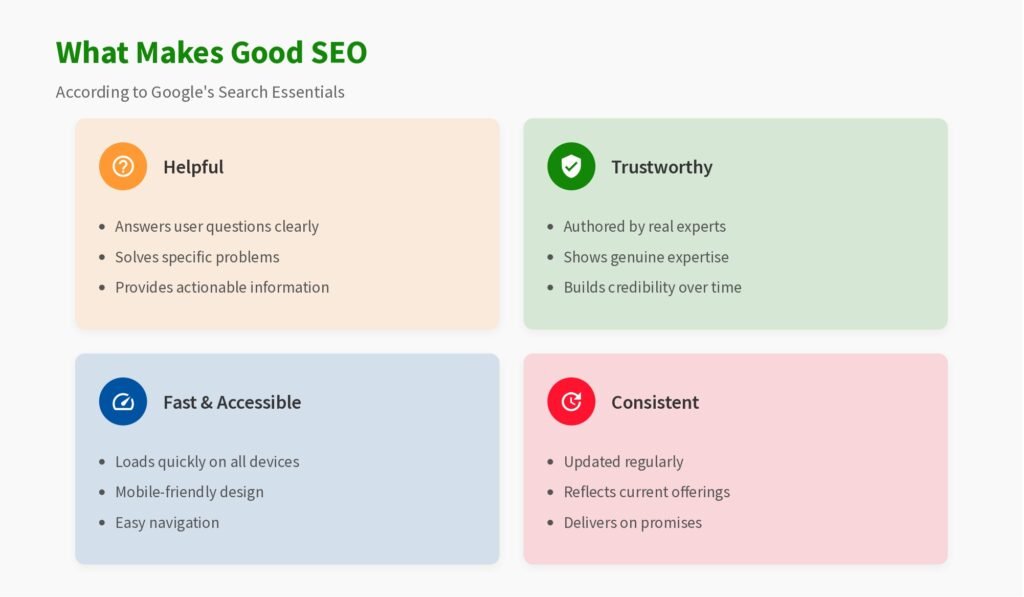
What Makes Good SEO?
According to Google’s Search Essentials, the best content is:
- Helpful: Answers user questions clearly.
- Trustworthy: Authored by real people with genuine expertise.
- Fast & accessible: Loads quickly and works well on all devices.
- Consistent: Updated regularly with new insights or offerings.
For small businesses, this means focusing on helpfulness over hype. No need for complicated tools or huge teams, clarity and consistency are your real growth engines.
How AI Can Simplify SEO Without Losing the Human Touch?
AI doesn’t replace human marketers; it makes them faster, smarter, and more strategic.
At AMS, we call this approach “Human-AI SEO” — where artificial intelligence handles repetitive or data-heavy tasks, and humans focus on strategy, emotion, and authenticity.
Here’s How AI Helps
Research Faster
- AI tools like ChatGPT, Perplexity, and Gemini can quickly generate keyword ideas, questions people ask, and trending topics.
- Example: A bakery owner in Mumbai can ask AI, “What do people search for when ordering customized birthday cakes?” and get dozens of real-world topics instantly.
Organize Smarter
AI can cluster related ideas into categories services, blogs, and FAQs, helping you plan your website in a logical, Google-friendly way.
Write First Drafts
AI can suggest outlines or even full drafts. But always remember: it’s your job to refine, fact-check, and personalize. Google’s Helpful Content Guidelines clearly emphasize that original, people-first content wins, not automated fluff.
Analyze and Improve
AI-based tools like SurferSEO or Frase can compare your pages with top-ranking competitors and recommend improvements in readability, structure, or word balance.
Automate Small Repetitive Tasks
For example:
- Using AI to summarize Google Analytics reports weekly.
- Creating meta descriptions for blog posts.
- Generating schema markup (structured data) automatically.
Where Humans Still Win?
- Understanding local culture and emotion.
- Writing persuasive CTAs and brand stories.
- Ensuring factual accuracy.
- Maintaining long-term brand consistency.
AI gives you the speed. Humans give you the soul.
Laying the Foundations of Strong SEO
Before writing blogs or using tools, your website needs a strong foundation. Think of it like setting the base for a house — without it, the structure won’t last.
Step 1: Technical Clarity
Ensure your site loads quickly, especially on mobile.
Check your Core Web Vitals metrics like page speed, interaction delay, and layout stability.
Use PageSpeed Insights or Web.dev Vitals to test your site.
Ideal performance goals:
- Largest Contentful Paint (LCP): under 2.5 seconds
- Interaction to Next Paint (INP): under 200ms
- Cumulative Layout Shift (CLS): below 0.1
If your site feels slow, tools like Cloudflare CDN or ImageOptim can help compress files safely.
Step 2: Easy Navigation
Visitors should find information in 2–3 clicks. Organize your site clearly:
- Home → Introduction + key CTA
- About → Who you are & why people can trust you
- Services → What you offer
- Blog → Educational articles
- Contact → WhatsApp, call, and form options
Make sure every service page links internally to related posts or FAQs.
Step 3: Google Business Profile
Your free Google listing is your digital storefront. Visit Google Business Profile and ensure:
- Name, address, and phone are correct
- Photos are recent
- Working hours are accurate
- You reply to reviews regularly
- You post short updates weekly
This single step often doubles local visibility.
AI-Powered Research: Finding the Right Topics and Keywords
Instead of guessing what to write, AI helps you discover exactly what people are searching for.
Tools You Can Use
- ChatGPT or Gemini for brainstorming ideas
- AnswerThePublic to see real questions from users
- Google Keyword Planner for search volume insights
- Google Trends for seasonality
Example
Suppose you own a yoga studio in Chennai. Ask AI:
“Find long-tail keyword ideas around yoga classes for working professionals in Chennai.”
AI might suggest:
- “Morning yoga classes near Anna Nagar”
- “Corporate yoga sessions in Chennai”
- “Best yoga for stress relief after work”
Each of these becomes a potential page or blog post written by you, refined by experience, and loved by local searchers.
Next Step: Cluster Your Topics
Group similar ideas into content clusters, for instance:
- Main Page: Yoga Classes in Chennai
- Subpages: Yoga for Beginners, Private Yoga Instructors, Corporate Wellness Programs
This builds topic authority and helps Google understand your expertise in depth.
Creating Content That Feels Real
The biggest mistake businesses make is writing for algorithms instead of people. Google now evaluates how content feels, not just how it’s optimized.
Keep It Simple
Write as if you’re explaining to a friend. Avoid stuffing the same keyword repeatedly. Instead, use natural phrases that your customers use.
Add Personal Touch
Talk about experiences. For example:
“When we first started teaching yoga in Chennai, most people came in for fitness. Within weeks, they noticed better focus and less stress that’s when we realized yoga had to be more than just exercise.”
This human voice builds connection and trust.
Use Visuals
Add real photos, short videos, and infographics that explain things clearly. Use descriptive file names and alt text (e.g., “custom-birthday-cake-Mumbai.jpg”).
Make It Skimmable
- Most readers scan before they read.
- Use short paragraphs, bullet points, and meaningful subheadings.
- End every section with a clear takeaway.
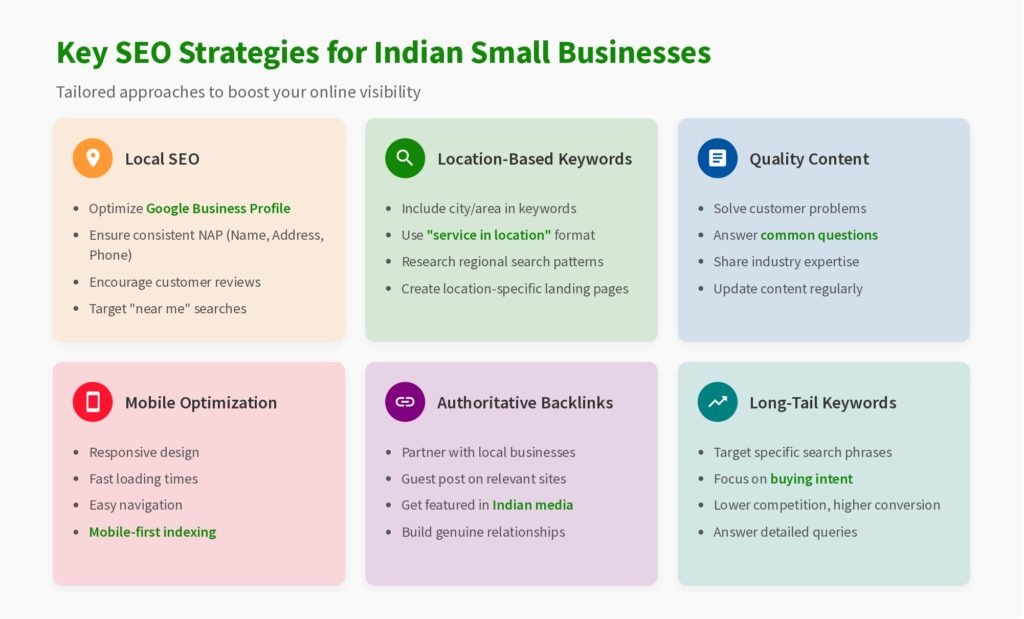
Local SEO: Winning in Your Neighborhood
If you serve a city or a few nearby areas, local SEO is your secret weapon. Here’s how to strengthen it:
- Create City Pages
Example:- “Interior Design Services in Bengaluru”
- “Digital Marketing Agency in Jaipur”
Keep them unique, mention landmarks, client stories, and local language phrases.
- Use NAP Consistency
Ensure your Name, Address, and Phone number match across all listings — website, Google, and social profiles. - Earn Local Mentions
Get featured in nearby blogs or business directories. Even small local news coverage helps credibility. - Collect Reviews
Ask happy customers to share genuine feedback. Google considers reviews a trust signal.
AI and Human Collaboration: The AMS Approach
At AMS, we’ve built a simple but powerful 5-step workflow for AI-assisted SEO:
- AI Research — Find ideas, questions, and gaps.
- Human Planning — Prioritize based on real business needs.
- AI Drafting — Generate outline or summary.
- Human Editing — Add brand voice, emotion, and accuracy.
- Optimization — Structure, interlink, and publish ethically.
This blend keeps the speed of technology and the warmth of human understanding, exactly what Google rewards today.
Measuring Growth and Staying Consistent
SEO is like building trust in real life; it grows with time and consistency. There’s no fixed formula, but you can track progress clearly.
Metrics That Matter
- Organic Visits: How many people find you through search
- Engagement: How long they stay, how many pages they explore
- Leads or Calls: How many visitors contact you
- Top Queries: Which phrases bring you traffic
- Page Experience: Site speed and usability
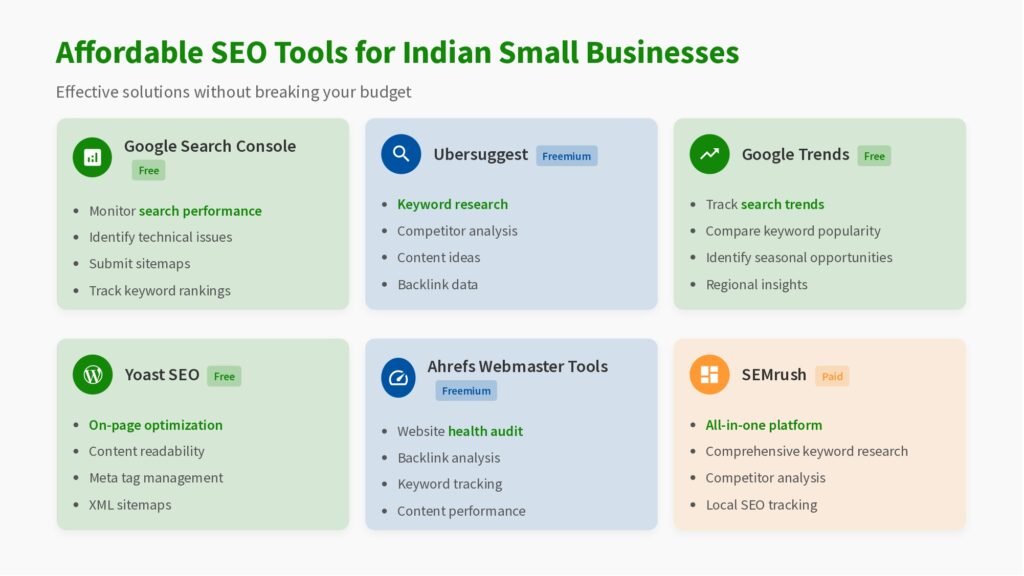
Use tools like:
- Google Analytics 4 for visitor behavior
- Google Search Console for search performance
- Ahrefs Webmaster Tools for backlinks
The Long Game Mindset
SEO isn’t a race; it’s a relationship. When you treat it as an ongoing habit, not a campaign, the results multiply naturally.
Here’s what that mindset looks like:
- Month 1–2: Fix your website, set up Google Business, and publish core pages.
- Month 3–6: Add consistent, helpful blogs and improve site structure.
- Month 6–12: Build links, collect reviews, track data, and refine based on results.
Over time, SEO becomes your most stable and cost-effective growth engine. Every article you publish, every FAQ you answer keeps working for you long after you write it. That’s the real power of organic visibility.
Conclusion: Growing with Trust, Not Tricks
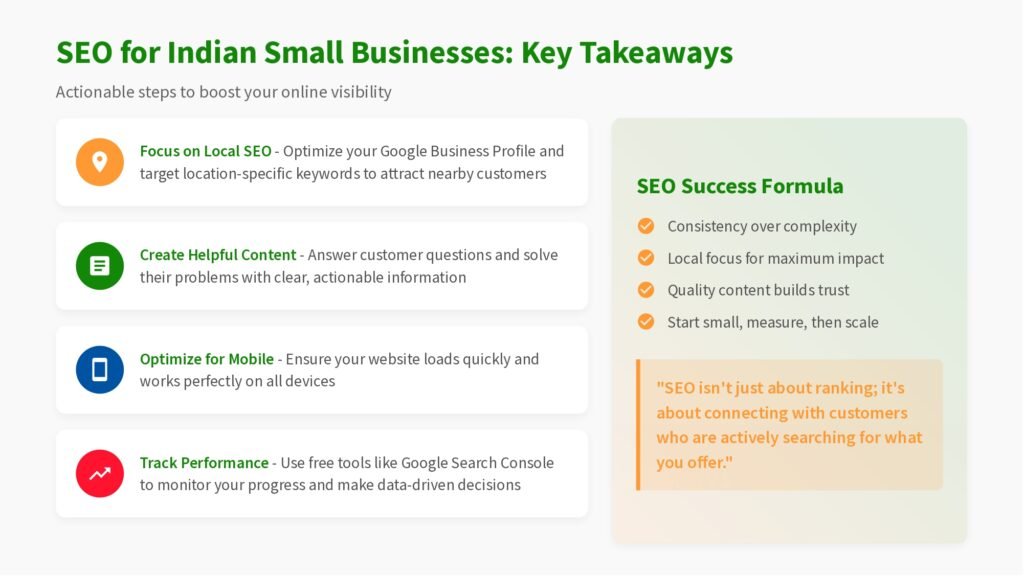
Search optimization is not about gaming Google; it’s about helping people. When your website genuinely answers questions, shows expertise, and feels human, search engines reward you automatically.
Artificial intelligence can help you organize, research, and scale faster. But authenticity, empathy, and expertise still come from you.
At AI Marketing Services (AMS), our mission is to empower Indian entrepreneurs to grow online the right way with transparency, ethics, and technology that supports people, not replaces them.
If you’ve ever wondered, “Where do I even start with SEO?”, you’re not alone. We’re here to simplify that path.
Start today with a free 15-minute SEO mini-audit
Discover small changes that can make a big difference to your online visibility.
Book your audit here →
FAQs
No. AI can assist with ideas and organization, but it lacks intuition and local understanding. You need human judgment to ensure accuracy and emotional connection.
Absolutely. Even AI-powered answers draw from well-optimized, authoritative websites. SEO ensures your content is part of that knowledge base.
Most businesses start noticing gradual improvements in 2–3 months, but meaningful growth compounds over time. SEO rewards patience and consistency.
Both matter. Content attracts users; technical SEO ensures they enjoy the experience. Think of it as heart and lungs, you need both to stay alive online.
Avoid shortcuts like paid backlinks or copied content. Focus on originality, transparency, and compliance with Google’s Search Guidelines.
